


Get Found by Google. Get Cited by AI.
Search is splitting in two
Traditional SEO
Rankings, authority, and technical health on Google. Still where most buyers verify you exist, and still the foundation AI engines learn from.
AEO. Answer Engine Optimization
Schema markup, llms.txt, content structure, and trust signals that make AI engines find, understand, and cite you when your prospects ask.
Most B2B sites have never been audited for AEO readiness, schema missing, llms.txt nonexistent, AI crawlers silently blocked. The companies winning citations started 18 months ago.
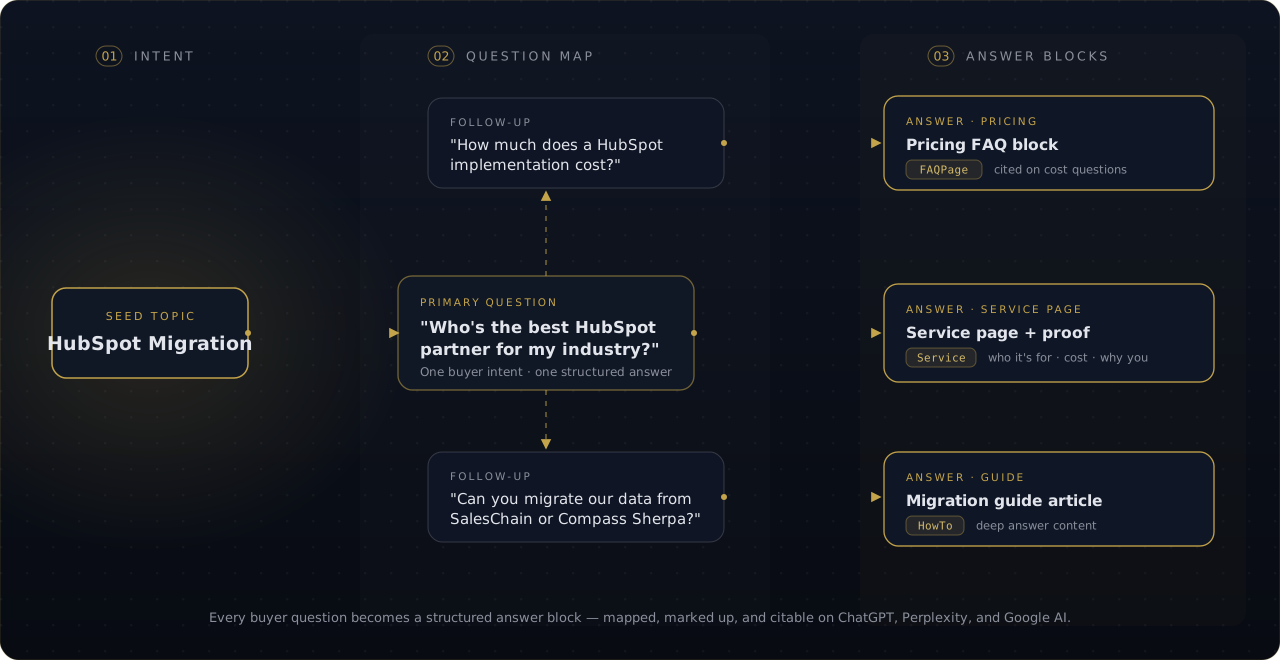
How AEO works — layering questions into answers AI can cite
One buyer intent branches into the real questions people ask, each mapped to a structured answer block on your site, marked up so ChatGPT, Perplexity, and Google AI pull your content as the answer.
The numbers behind the shift
4
answer engines we ask
Every analysis puts your buyers’ questions to ChatGPT, Perplexity, Claude and Gemini, so you see who gets cited today.
16
checks on every page
Each page is scored on sixteen things that search engines and AI assistants read, from titles and schema to FAQ markup.
10
measures in your score
Crawlability, AI access, answer-shaped content, on-page, schema, local, authority, demand capture, speed and publishing, scored out of 100.
The window is open — but not for long
Three shifts are happening at once. The teams that move now compound the advantage; the ones that wait spend years catching up.
Buyers now ask AI first
Prospects research through ChatGPT, Perplexity, and AI overviews before they ever hit your site. If you're not the cited answer, you're not in the deal.
The tooling finally works
What used to take a data team and six months now ships in weeks — the stack matured, and connected systems are a build decision, not a science project.
Early movers compound
Systems get smarter with data and time. The team that starts this quarter is a year of learning ahead of the one that starts next year.
Start with the free diagnostics
AEO Health Check
Our full analysis, free and right on the page: your score out of 100 across ten measures, how you compare with the average of sites we have analysed, your first fixes and a link to your full report. About ten minutes.
Website Grader
Performance, SEO fundamentals, and Core Web Vitals, see how your site scores in seconds.
What we audit and build, the six dimensions
AEO Infrastructure
llms.txt, sitemap, robots configuration, and the schema types AI engines read first. The 30% weight in your score.
Schema Markup
Organization, Service, FAQPage, HowTo, and breadcrumb structured data, complete, valid, and on every page that earns it.
Content Quality Signals
Author bylines, freshness, depth, and the answer-shaped structure that gets pulled into AI responses.
SEO Authority
The classic foundation, rankings, backlinks, technical health, that AI engines still learn trust from.
Live Citation Testing
We query Perplexity, OpenAI, and Anthropic engines directly: does AI mention you today? Not theory, measurement.
Competitor Gap
Who is being cited in your category instead of you, and the specific gaps between you and them.
From invisible to cited in 90 days
Audit first, foundation second, then the compounding work of authority.
01
SEO/AEO Audit
Days 1-14
SEO/AEO Audit
Full visibility teardown across schema, llms.txt, content signals, authority, and live AI citations.
02
Foundation Sprint
Days 10-40
Foundation Sprint
Full schema stack, llms.txt, and content restructured so AI engines cite you.
03
Content & Clusters
Days 30-60
Content & Clusters
Trust signals, topic clusters, and the answers AI engines pull from.
04
Measure & Compound
Days 55-90
Measure & Compound
Citation tracking, rankings, and iteration, authority compounds from here.
Go deeper: the AEO knowledge base
What Is AEO? The 2026 B2B Guide
Our 6,000-word deep dive: the four pillars, the engines, the scoring, and the roadmap, the definitive reference we wrote for B2B teams.
The Resource Library
How-to articles, playbooks, and marketing guides, organized by topic, knowledge-base style, and growing weekly.
The Copier Dealer’s Guide to AEO
Our field guide for office technology dealers: buyer question trees, seven content flows, and the 90-day rollout.
Check your own site: the SEO and AEO checklist
80 checks, grouped by topic. Tick what your site already does and watch your score move. Your ticks stay in your browser and carry over to the full checklist.
Crawl and index0 of 8
Search engines can reach and index the pages that matter.
- Every page you want found returns a 200 and is not blocked by robots.txt
A page a crawler cannot fetch cannot rank, whatever else is true about it.
How to check it
Open yoursite.com/robots.txt and check no Disallow line covers your key sections. Run your top ten URLs through URL Inspection in Search Console.
About 15 minutesPartly measured - An XML sitemap lists your canonical pages and is submitted in Search Console
A sitemap is the cleanest way to tell search engines which pages you consider important.
How to check it
Find your sitemap (often /sitemap.xml), confirm it lists only live, indexable URLs, and check it shows as processed in Search Console.
About 15 minutesPartly measured - Each page has one self-referencing canonical URL
Duplicate versions of a page split its signals; a canonical says which one counts.
How to check it
View source on a few pages and look for a rel=canonical tag that points to the page's own preferred URL.
About 15 minutesMeasured by our analysis - No important page carries a noindex tag by accident
Redesigns and staging settings often leave a noindex behind, and the page quietly drops out.
How to check it
Search Console's Pages report lists 'Excluded by noindex'. Check that every URL on that list is there on purpose.
About 15 minutesMeasured by our analysis - Redirects are single 301 hops with no chains, loops or internal links to redirected URLs
Every extra hop wastes crawl time and dilutes the link; loops make the page unreachable.
How to check it
Crawl the site with any site crawler and review the redirect report. Update internal links to point straight at the final URL.
A few hoursNot measured yet - Only one version of your site is live: http, https, www and non-www all redirect to a single preferred address
Four versions of the same site split links and signals and can be indexed as duplicates.
How to check it
Type each version into a browser and confirm all of them end up at one address with a single redirect.
About 15 minutesPartly measured - Missing pages return a proper 404 with a helpful custom page, not a blank or 'soft' page that looks like it worked
Soft 404s waste crawl time and confuse indexing, and a helpful 404 keeps visitors on the site.
How to check it
Visit a made-up URL on your site. It should show a clear not-found page with search and links, and the status should be 404.
About 15 minutesNot measured yet - If you serve more than one country or language, hreflang tags point each version of a page to the others
Without them, engines may show the wrong version to the wrong audience.
How to check it
Check each translated or regional page lists all its alternates, including itself, with the right language and region codes.
A few hoursNot measured yet
On-page basics0 of 9
The fundamentals every page needs, checked one page at a time.
- Every title tag is unique, leads with the main topic and is about 50 to 60 characters
The title is the headline in the results page. Longer titles tend to be cut off, and repeats make pages compete.
How to check it
Export titles from a crawler and sort by length and duplicates. Rewrite the repeats and the ones that start with your brand name.
A few hoursPartly measured - Every meta description summarizes the page in about 150 to 160 characters and gives a reason to click
Search engines often use it as the snippet, so it works as your ad copy.
How to check it
Review descriptions for the same length range, and rewrite any that are empty, duplicated or generic.
A few hoursPartly measured - Each page has exactly one H1 that matches the intent of the title
One clear H1 tells readers and engines what the page is about, and the match with the title confirms it.
How to check it
Check each key page has a single H1 and that it describes the same topic as the title tag.
About 15 minutesMeasured by our analysis - You know the search terms your buyers use, and each one is mapped to the page that should rank for it
Without keyword research you are guessing which questions to answer and which pages to build.
How to check it
List the terms buyers use, check their volume and difficulty in Search Console or a keyword tool, and assign each to one page.
A few hoursPartly measured - Every important page has a branded share image and social sharing tags
A clear image and headline make links look credible when they are shared and give platforms the right preview.
How to check it
Paste a few key URLs into a social share debugger and confirm the image, title and description look right.
About 15 minutesPartly measured - H2s break the page into descriptive sections, with question headings where buyers ask questions
Headings are how people scan and how engines find the part that answers a query.
How to check it
Read only the headings on a page. If they do not tell the story, rewrite them. Avoid labels like Overview or More info.
About 15 minutesMeasured by our analysis - URLs are short, readable, lowercase and hyphenated
A clean URL is easier to share, remember and understand at a glance.
How to check it
Scan your top pages. Fix any with dates, IDs, parameters or long strings, and redirect the old URL if you change one.
About 15 minutesNot measured yet - Every meaningful image has descriptive alt text and a reasonable file size
Alt text helps accessibility and image search, and heavy images slow the page.
How to check it
Crawl for images missing alt text, then compress anything much larger than it displays.
A few hoursPartly measured - A primary call to action is visible without scrolling and repeated at the end
Traffic with no next step is wasted. Make the action obvious on both ends of the page.
How to check it
Open your top ten pages on a phone and check you can see what to do next without scrolling.
About 15 minutesPartly measured
Content0 of 7
Pages that fully answer the question they target.
- Each page targets one primary search intent, and no two pages compete for the same query
Two pages chasing the same query split their strength, and neither ranks as well as one strong page would.
How to check it
List your target query for each page. Where two pages share one, merge them or sharpen each page's angle.
A few hoursPartly measured - Pages are complete enough to answer the question, not thin
Very short pages rarely satisfy a question. Our analysis flags pages under 300 words as thin.
How to check it
Sort pages by word count. Expand, merge or remove the shortest ones that you want to rank.
A few hoursMeasured by our analysis - The obvious follow-up questions are answered on the page
Buyers ask what it costs, how it works and who it is for. A page that stops early loses the next search.
How to check it
For each key page, write the three questions a buyer asks next and check the page answers them.
A few hoursJudged by our analysis - Content shows specifics: sourced numbers, named tools, steps and real examples
Specifics are what make a page worth citing instead of any other page on the topic.
How to check it
Highlight every general claim on a page and replace it with a concrete example, step or sourced figure.
A few hoursJudged by our analysis - Articles show an author and a published or updated date, and key pages are refreshed at least yearly
Visible authorship and dates tell readers and engines the page is real and current.
How to check it
Add bylines and dates to articles, and put a yearly review for your most important pages in the calendar.
Ongoing habitPartly measured - Related pages are organized into topic clusters, with a main guide on each topic linked to and from its supporting pages
Clusters show search engines you cover a subject in depth, not just in passing.
How to check it
Pick your three most important topics. For each, make sure there is one main guide that links to every supporting page and is linked back from them.
A few hoursPartly measured - You publish on a regular schedule, and what you publish is substantial
A steady rhythm of useful pages signals an active, reliable source and gives you more chances to be found.
How to check it
Decide a realistic cadence, such as two good pages a month, and put it in the calendar. Substance beats volume.
Ongoing habitPartly measured
Speed and technical health0 of 6
A fast, secure site that works on a phone.
- Key pages meet the Core Web Vitals 'good' thresholds on mobile: LCP 2.5 seconds or less, INP 200 milliseconds or less, CLS 0.1 or less
These are Google's published thresholds for a good page experience, measured on real visitors.
How to check it
Open the Core Web Vitals report in Search Console, or run a key page through PageSpeed Insights, and fix the slowest template first.
A few hoursPartly measured - The site is mobile friendly: readable text, tappable buttons and no sideways scrolling
Most searches happen on phones, and engines index the mobile version first.
How to check it
Open your top pages on an actual phone and try to complete the main action with one thumb.
About 15 minutesNot measured yet - The whole site is served over HTTPS with no mixed content warnings
Browsers flag insecure pages, and visitors leave when they see a warning.
How to check it
Load key pages and check the padlock. Fix any page that pulls in images or scripts over plain http.
About 15 minutesPartly measured - There are no broken links in your navigation, footer or key pages
Dead links frustrate visitors and waste crawl time.
How to check it
Run a link check across the site and fix or remove every 404 you find, starting with the navigation.
A few hoursPartly measured - Every important page is within three clicks of the homepage
Pages buried deep in the site are crawled less often and seen as less important.
How to check it
Use a crawler's depth report to list important pages more than three clicks down, then link to them from higher up.
A few hoursNot measured yet - Structured data validates with no errors
Broken markup is ignored, so the effort is wasted.
How to check it
Paste key URLs into Google's Rich Results Test and the Schema Markup Validator and fix what they report.
About 15 minutesPartly measured
Links and authority0 of 7
The links that tell engines which pages matter.
- Every page is linked to from at least three other pages on your site
A page nothing links to is an orphan, and engines find and value it less.
How to check it
Use a crawler's inlinks report to list pages with fewer than three links in, then add contextual links from related pages.
A few hoursPartly measured - Important pages link out to related pages using descriptive anchor text
Internal links pass context. 'Click here' says nothing, while 'our HubSpot onboarding guide' does.
How to check it
On your top pages, add a few links to related pages with anchors that describe the destination. Never change the page's headings to do it.
A few hoursPartly measured - You earn links from relevant sites: partners, customers, directories, podcasts and original research
Links from respected, related sites remain one of the strongest signals of authority.
How to check it
List five organizations that already know you and ask each for a relevant link, a mention or a directory listing.
Ongoing habitPartly measured - Your profiles on LinkedIn, Google Business Profile and industry directories are complete and consistent
These profiles are often what shows up next to your site, and mismatched details erode trust.
How to check it
Compare your name, address, phone and description across every profile and make them identical.
A few hoursCheck by hand - You track branded and non-branded search visibility every month in Search Console
What you do not measure you cannot improve, and branded traffic can hide a weak non-branded footprint.
How to check it
Filter the Search Console performance report by queries containing your brand name, then record both groups monthly.
Ongoing habitNeeds your Google access - Google Search Console and an analytics tool are installed and verified on every version of the site
They are the only way to see how you are found, what is broken and what is working.
How to check it
Confirm Search Console shows your site as verified and analytics records visits on every key page.
About 15 minutesNeeds your Google access - Customers can review you on the sites buyers check, and you reply to reviews
Third-party reviews build trust and often rank on their own for your name.
How to check it
Search your company name plus 'reviews'. Make sure your profiles on Google and the main review sites are claimed and current.
Ongoing habitPartly measured
Local and conversion0 of 3
Turning visibility into conversations.
- Your Google Business Profile is claimed and complete, if you serve a local market
For a local buyer this is often the first thing they see.
How to check it
Check categories, hours, services, photos and the link back to your site, and respond to reviews.
A few hoursNeeds your Google access - Local pages name the city or region you serve in the title and the opening
Location terms are how a local buyer's search matches your page.
How to check it
Add the city to the titles of your local service pages and the first paragraph, written naturally.
About 15 minutesPartly measured - Every key page has a form or phone link, and the conversion is tracked as an event
Without tracking you cannot tell which pages produce conversations.
How to check it
Make sure form submits and phone taps fire events in your analytics, and check they appear in reports.
A few hoursPartly measured
AI crawler access0 of 7
Answer engines can reach and read your pages.
- robots.txt does not block the AI crawlers you want: GPTBot, ClaudeBot, PerplexityBot and Google-Extended
If a crawler is blocked it cannot read the page, so the engine cannot cite it.
How to check it
Open robots.txt and look for Disallow rules aimed at those user agents. Decide deliberately which to allow.
About 15 minutesMeasured by our analysis - The main text of each page is in the HTML, not added only by JavaScript
Many crawlers read the raw HTML and may never run your scripts.
How to check it
View source on a key page and search for a sentence from the body. If it is missing, ask your developer to render it server-side.
About 15 minutesNot measured yet - An llms.txt file at the root of the site summarizes who you are and links your best pages
It is a newer convention that gives AI tools a short, curated map of your site. It is cheap to add and not a guarantee.
How to check it
Publish /llms.txt with a one-line description of the company and a list of your most useful pages, each with a short note.
About 15 minutesMeasured by our analysis - Your CDN or firewall is not blocking legitimate crawlers
Bot protection can silently turn away the crawlers you want.
How to check it
Check your security settings and server logs for blocked requests from the major AI and search crawlers.
A few hoursPartly measured - Sitemap dates are accurate so engines can find new and updated pages
Accurate last-modified dates help crawlers spend time on what changed.
How to check it
Check your sitemap shows real update dates and not today's date on every page.
About 15 minutesNot measured yet - Your site is verified in Bing Webmaster Tools, and new pages are submitted using IndexNow
Bing's index feeds several AI assistants, so being indexed there helps you be found in their answers.
How to check it
Verify the site in Bing Webmaster Tools, submit the sitemap and turn on IndexNow if your platform supports it.
About 15 minutesCheck by hand - Pages are eligible to appear as snippets: no 'nosnippet' or restrictive snippet length settings
Settings that stop search engines quoting your page also stop them using it in answers.
How to check it
Search your page source for nosnippet and max-snippet directives and remove any you did not set on purpose.
About 15 minutesNot measured yet
Answer-first content0 of 10
Pages written so the answer can be lifted cleanly.
- Each page opens with a direct answer of roughly 40 to 60 words before any background
Engines quote the opening, and a page that buries its answer is passed over for one that states it.
How to check it
Rewrite the first paragraph of a key page so it answers the title's question outright. Move the background below it.
A few hoursJudged by our analysis - Headings are written as the questions buyers actually ask
A heading that matches a question makes the matching answer easy to find and quote.
How to check it
Turn vague headings into questions, using wording from your sales calls and support tickets.
A few hoursPartly measured - Each key page has an FAQ of five to eight real questions with plain, self-contained answers
Each answer can be quoted on its own, which is what an answer engine needs.
How to check it
Collect the questions customers ask most, answer each in two or three sentences and add them to the page.
A few hoursPartly measured - Your main topic is defined in one clear sentence that could be quoted on its own
A definition is the most quotable sentence a page can contain.
How to check it
Add a sentence of the form 'X is ...' near the top of each topic page, in plain words.
About 15 minutesJudged by our analysis - Answers include concrete specifics: named tools, steps, sourced figures and labeled examples
Specific answers are cited. Generic ones are interchangeable.
How to check it
Replace each vague claim with a step, a name or a figure you can source, and label illustrative numbers as examples.
A few hoursJudged by our analysis - Content uses lists, tables and short paragraphs so passages can be quoted alone
Long unbroken text cannot be quoted cleanly, so it gets summarized away.
How to check it
Break long sections into headed passages of a few sentences, and turn comparisons into tables or lists.
A few hoursJudged by our analysis - Key facts such as services, locations, hours and contact details are in plain text, not only inside images or PDFs
Engines cannot reliably read text locked in an image, so a fact only in a graphic is a fact they do not have.
How to check it
Look at your key pages with images turned off. Anything important that disappears should also be written as text.
About 15 minutesNot measured yet - Pages cover the follow-ups: cost, how it works, who it is for, alternatives and risks
Engines break a question into sub-questions, and the page that answers more of them is chosen more often.
How to check it
For each key page, check it answers cost, process, fit, alternatives and risks, even if only briefly.
A few hoursJudged by our analysis - Your pricing or typical price ranges are published, and you have honest comparison and alternatives pages
Buyers and engines ask what something costs and how it compares. A page that answers gets quoted, and one that dodges does not.
How to check it
Add a clear pricing page or ranges, and a 'compared to' page for the two or three alternatives buyers weigh you against.
A few hoursNot measured yet - A glossary defines the terms of your field in plain language
Definitions are some of the most quoted passages, and a glossary earns links and citations over time.
How to check it
List twenty terms your buyers ask about and give each a short, quotable definition and a link to the deeper page.
A few hoursNot measured yet
Structured data0 of 8
Machine-readable labels that say what each page is.
- Organization schema on the homepage with name, logo, URL and sameAs profile links
It is a machine-readable answer to 'what is this company', and it ties your profiles together.
How to check it
Add Organization JSON-LD to the homepage and validate it in the Rich Results Test.
A few hoursPartly measured - FAQPage schema that matches the visible FAQ on each page
It labels each question and answer so engines can read them cleanly. The markup must match what visitors can see.
How to check it
Add FAQPage JSON-LD that mirrors the on-page questions and answers exactly.
A few hoursPartly measured - Article schema with author, published date and modified date on every post
It states who wrote the piece and when, which engines weigh.
How to check it
Add Article markup to your blog template with author, datePublished and dateModified filled from the post.
A few hoursPartly measured - Service or Product schema on each offering page
It spells out what you sell in terms an engine can use.
How to check it
Add Service or Product markup to each offer page with a name, description and the organization providing it.
A few hoursMeasured by our analysis - LocalBusiness schema with address and phone, if you serve a local market
It confirms where you operate and how to reach you.
How to check it
Add LocalBusiness markup with your real address, phone and service area to the homepage and contact page.
A few hoursMeasured by our analysis - Person schema for the founder and key authors, linked to their profiles
Named experts are a trust signal, and the markup connects the person to the page.
How to check it
Add Person markup for your authors with a job title and sameAs links to their professional profiles.
A few hoursPartly measured - BreadcrumbList markup, and every structured data block validates
Breadcrumbs describe where a page sits, and broken blocks are ignored.
How to check it
Add BreadcrumbList to your page template and validate every page type.
About 15 minutesPartly measured - Review or AggregateRating markup on real reviews you display
It labels genuine customer feedback so engines can read it. Only mark up reviews visitors can actually see.
How to check it
Add Review markup to pages that show customer reviews, and never to reviews you cannot display.
A few hoursPartly measured
Entity clarity0 of 5
Engines are certain who you are.
- Your company name, address, phone and description are identical on your site, Google Business Profile, LinkedIn and directories
Engines connect mentions of you. Inconsistent details make them less sure it is the same company.
How to check it
Put every public listing side by side and fix any difference in name, address, phone or description.
A few hoursNeeds your Google access - sameAs links point to your official profiles
They prove which profiles belong to you, so mentions elsewhere are credited to you.
How to check it
List your official profiles in the Organization schema's sameAs field and keep them current.
About 15 minutesPartly measured - A real About page names the people, the location and what you do
It is the page an engine anchors your identity to.
How to check it
Check the About page states who you are, where you are, who you serve and who leads the company, in plain sentences.
A few hoursNot measured yet - You are listed on the profile sites engines use to learn about companies: LinkedIn, Crunchbase and relevant industry directories
Engines cross-check what a company says about itself against these sources.
How to check it
Claim and complete each profile, and make sure the description matches your site word for word.
A few hoursNot measured yet - Your name is disambiguated if it is shared with another company or a common word
If another entity shares your name, an engine may mix you up with it.
How to check it
Add your category or location to your name in titles and descriptions, for example 'Acme, a managed print provider in Ohio'.
About 15 minutesNot measured yet
Trust and authority0 of 6
Why a model should believe you over someone else.
- Content shows who wrote it, their role and their first-hand experience
Engines and readers weigh who is speaking, and anonymous pages carry less weight.
How to check it
Add a byline with a short bio to every article and link it to a profile page.
A few hoursJudged by our analysis - Claims cite authoritative sources by name, with links
Naming sources makes your claims checkable, and checkable claims are cited more readily.
How to check it
For every factual claim, name the source and link to it. If you cannot source it, remove or soften it.
A few hoursNot measured yet - Real reviews, named customers and certifications are shown, with permission
Third-party proof is a strong trust signal for people and for engines.
How to check it
Add reviews, case studies and certifications you can verify, and get written permission before naming a customer.
Ongoing habitJudged by our analysis - Sources engines already trust mention you: industry publications, directories and partner pages
Engines lean on the same trusted sources again and again, so being present there matters.
How to check it
Ask the questions your buyers ask in an engine, note which sources it cites, and work to be listed or quoted there.
Ongoing habitPartly measured - You publish original data, research or a named framework that others can cite
Something only you can say is the strongest reason for an engine to name you as a source.
How to check it
Turn your own numbers, surveys or methods into one page worth quoting, with the method and date shown.
Ongoing habitPartly measured - You take part where buyers ask questions: Reddit, Quora, LinkedIn, YouTube and industry forums
Answer engines frequently pull from community answers. Helpful, honest replies can put your name in front of the engine.
How to check it
Find the threads where your buyers ask, answer genuinely and disclose who you are. Never spam.
Ongoing habitCheck by hand
Measurement0 of 4
You can see whether it is working.
- Pick 20 to 25 buyer questions and ask them every month in ChatGPT, Perplexity, Claude and Gemini
It is the direct way to see whether you are cited today and whether that changes.
How to check it
Write the questions once, ask each engine monthly and record who is cited and whether you are among them.
Ongoing habitPartly measured - AI referral traffic is tracked in analytics
It shows whether answer engines send you visitors.
How to check it
Look in your analytics for traffic from chatgpt.com, perplexity.ai and similar referrers, and save it as a report.
About 15 minutesNeeds your Google access - You track whether your pages appear in Google's AI Overviews for your target questions
AI Overviews are now a place where a buyer meets an answer first.
How to check it
Search your target questions monthly and note whether an AI Overview appears and whether your site is cited.
Ongoing habitNot measured yet - You check what AI assistants say about your company and correct anything wrong at the source
An engine repeats whatever it learned. If it has an old address, wrong service or outdated price, the fix is on the pages and profiles it learned from.
How to check it
Ask each assistant who you are and what you do. Fix wrong facts on your site and profiles, then check again next month.
Ongoing habitPartly measured
Transparent pricing
Frequently Asked Questions
What is AEO (Answer Engine Optimization)?
How is AEO different from SEO?
How do I know where I stand today?
How long until results?
Do you guarantee AI engines will cite us?
What does it cost?
Ask what would actually move your rankings
Send your domain and the terms you want. We will reply with an honest read, including if the answer is that your content is fine and the problem is elsewhere.